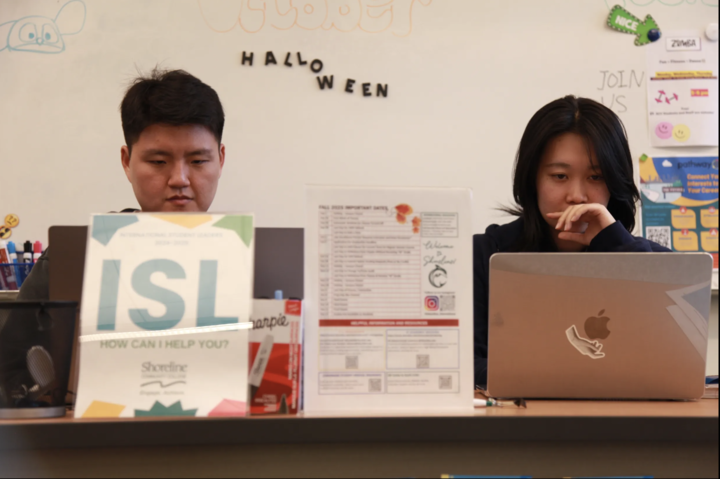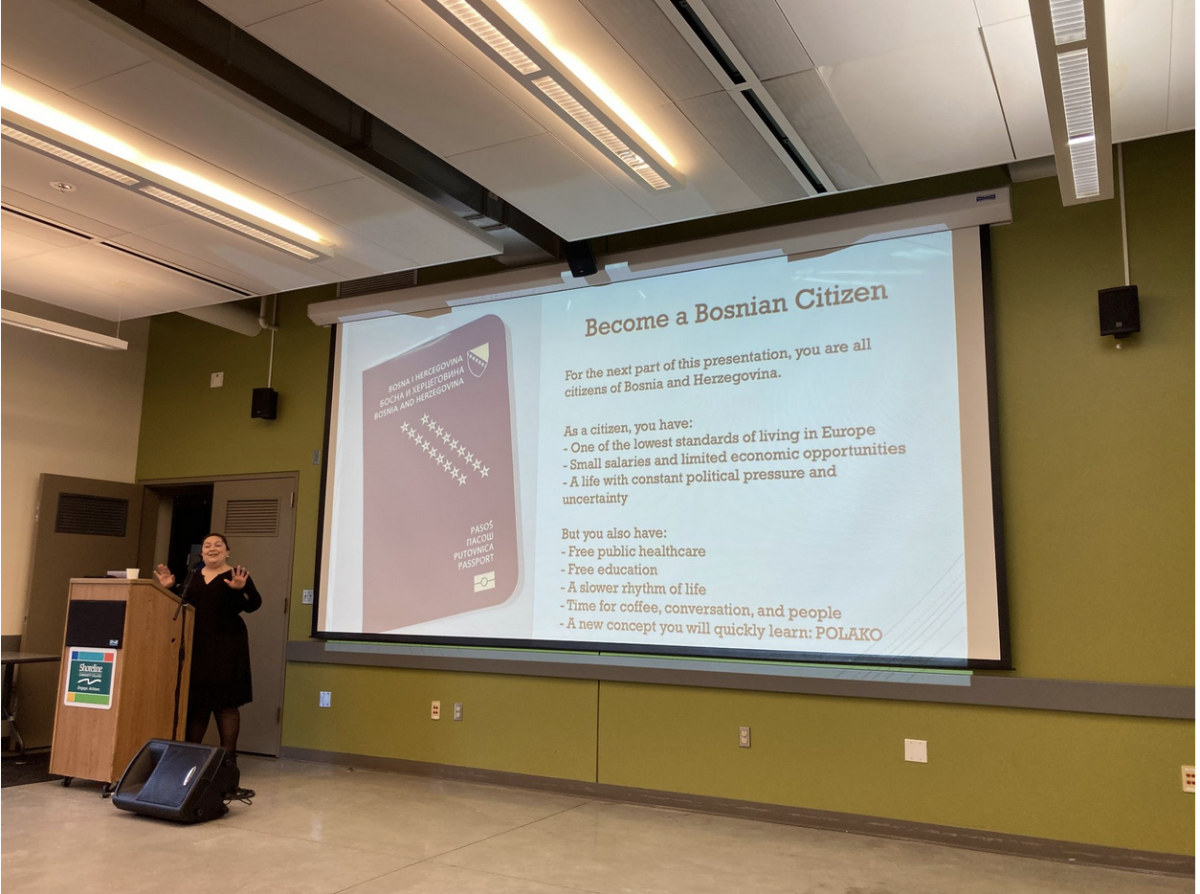

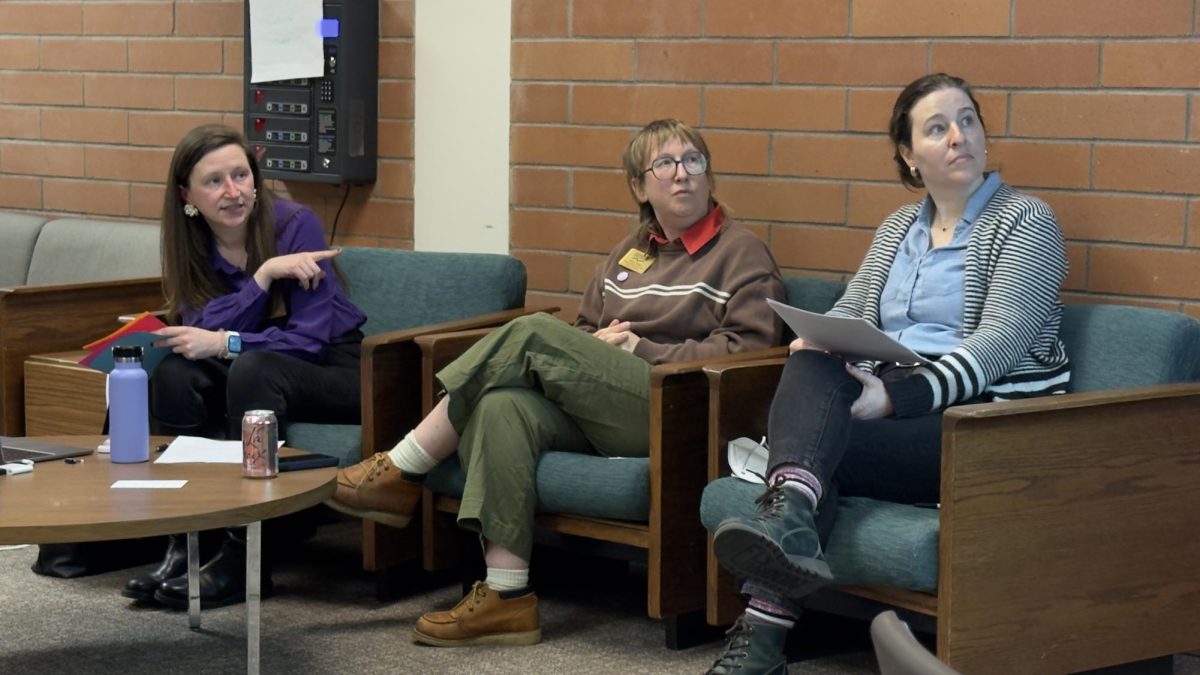
Three Shoreline College librarians convened an audience of approximately 20 faculty, staff and
students in the Ray W. Howard Library’s third-floor Writing Lab on a warm, sunny Wednesday
afternoon in late February for a one-hour panel discussion on artificial intelligence, research and
information literacy. The event, titled “A Conversation about GenAI’s Role in Research &
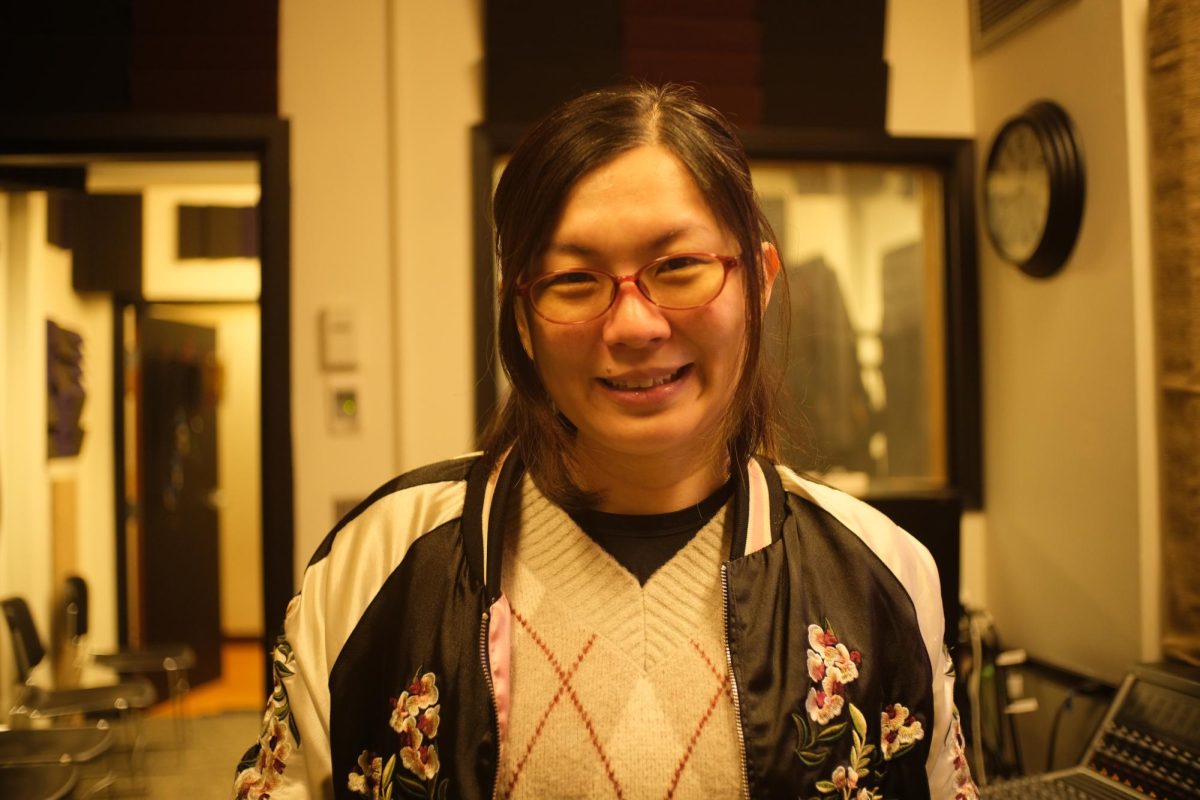
Misinformation,” was presented by Outreach and Inclusion Librarian Allison Fader, Digital and
Electronic Collections Librarian Caitlin Maxwell and Professional and Technical Programs
Librarian Carolyn Callaghan, who framed their perspective around their roles as information
professionals rather than technologists. Refreshments were provided.
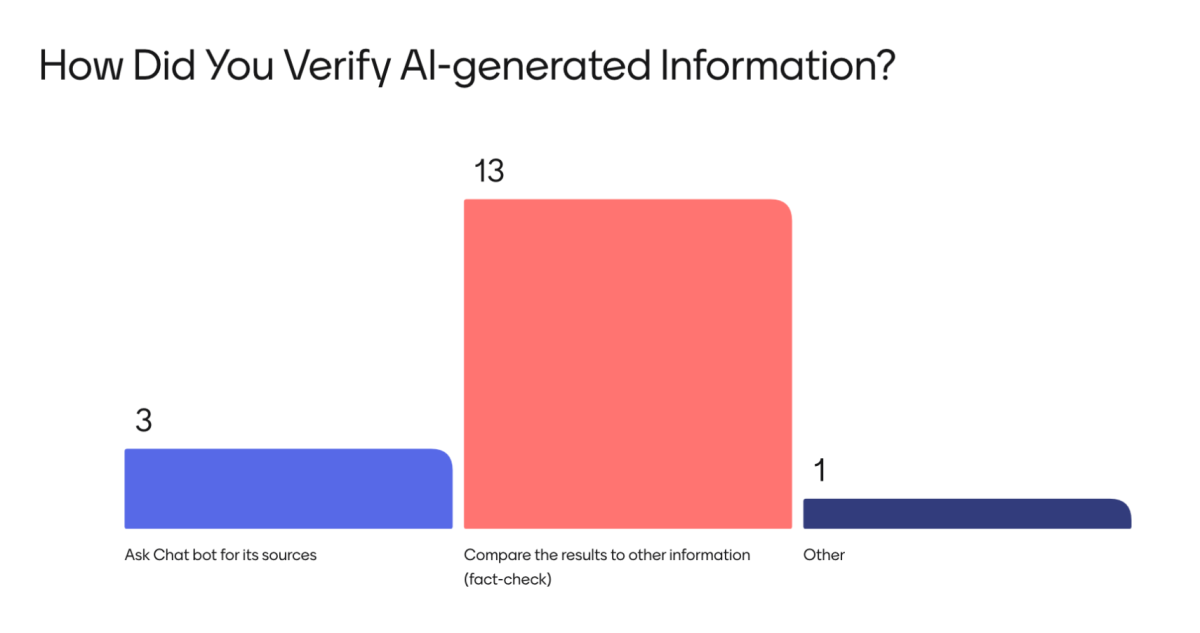
A live survey conducted at the start of the event found that the majority of audience members
described themselves as “somewhat familiar” with AI tools, with smaller groups identifying as
“very familiar” or “expert.” About two thirds of the audience said they had previously used AI
tools for research. About three quarters of the audience had experience with AI chatbots, of
those, the vast majority reported they had taken steps to verify the results, most commonly by
comparing AI output against other sources through fact-checking.
Callaghan opened by explaining the library’s rationale for hosting the event. “We’re not
programmers. We’re not computer scientists,” she said, “what we want to do is bring our
perspective as information professionals” to questions raised by generative AI. Fader walked the
audience through a fact-checking framework distributed on a handout: isolate specific,
searchable claims; verify them through lateral reading; check for assumptions, biases and breadth
of perspectives; decide whether the information is true, misleading or false; and repeat those
steps for each individual claim. She also introduced the concept of shifting from “text authority”
— trusting a source based on its publication or location — to “cognitive authority,” which means
evaluating whether the person who shared the information is actually trustworthy in context. The
handout noted explicitly that no reliable tools currently exist to identify AI-generated content,
making those critical thinking skills all the more essential. Maxwell presented research tools
designed for academic use, including ResearchRabbit, a citation-mapping platform that
visualizes connections between sources, and emphasized reviewing privacy policies before using
any AI platform.
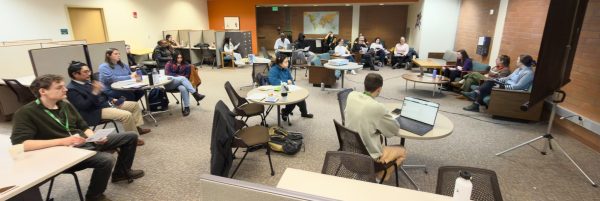
Panelists stressed that the same skills students use to evaluate traditional sources apply directly to
AI-generated content — and that the session was intended as a beginning, not a conclusion.
Additional resources, including a Fact-Checking AI with Lateral Reading Guide, an Evaluation
Rubric for AI Tools, and an SCC Library AI & ChatGPT Guide, were made available via QR
codes on the handout. Students are encouraged to continue the conversation by visiting library
staff at the front desk, scheduling an appointment, or reaching out at [email protected].
Generative AI models contributed to this article.