
What if everything you’ve learned about artificial intelligence was wrong?
It’s highly likely that you’ve already been misled by earnest-but-erroneous reporting on the wasteful use of water for data centers. You may be under the impression that generative AI models are bad at math. You may even have a strong feeling that using a generative AI model in any capacity is somehow inherently unethical. Your misgivings were surely based on the best-available information when you formed them, but yesterday’s facts can quickly become today’s misunderstandings, because science is an ongoing process, not a result.
The Man with the Golden Rice
Next time you’re at the grocery store reading the nutrition labels, note that the product you’re considering is probably being advertised as “non-GMO,” which is branding that aims to assure a product has been verified to be or derived from a non-genetically-modified organism. Similarly, information consumers look for “human made” or “no generative AI was used” in the making of commercial information products.
In the early 2000s, the backlash against genetically modified golden rice by environmental activists may have caused the premature deaths of millions of children in India alone at the time this University of California study was published in 2014. Golden Rice is a non-profit GMO, developed and distributed royalty-free by a non-profit public-private partnership to “resource-poor” populations. This unintended consequence led Greenpeace co-founder, Patrick Moore to recognize that “the poor have paid the majority of the price of the fight against GE technologies.” All signs again point to the fact that that backlash against generative AI will harm those whom it could help the most, while protecting no one but those who already have better alternatives.
This is just one example among many of how our best efforts to do good often end up harming the very people we say we seek to protect. Are we so certain of our good intentions with regard to generative AI regulation that we can’t possibly end up causing more harm there too? We could just as easily — some would say we already have — end up building a regulatory moat around big corporations like Disney, Universal and Paramount with overly-restrictive intellectual-property protections that claim to be for the benefit of beloved social-media influencers, and yet do quite the opposite.
The Mouse Always Wins
In Tori Noble’s 2025 essay for the Electronic Frontier Foundation on AI and Copyright, she writes, “Generative AI magnifies [the internet’s] benefits by enabling ordinary internet users to tell stories and express opinions by allowing them to generate text in a matter of seconds and easily create graphics, images, animation, and videos that, just a few years ago, only the most sophisticated studios had the capability to produce. Legacy gatekeepers want to expand copyright so they can reverse this progress. Don’t let them: everyone deserves the right to use technology to express themselves, and AI is no exception.”
The EFF is an organization founded in 1990 to “champion user privacy, free expression, and innovation” on the nascent information networks of its day.
Noble, a staff attorney with the EFF, says that halting innovation isn’t our only option and there is reason to believe that, “Stronger environmental protections, comprehensive privacy laws, worker protections, and media literacy,” is the best way to address our concerns. She says focusing on those protections over copyright battles will instead, “create an ecosystem where we will have defenses against any new technology that might cause harm in those areas, not just generative AI.” And generative AI, while new and frightening is just the tip of the iceberg of technological advancements we can expect in the coming years.
Dolphins Doing It for Themselves
The promise of artificial intelligence was never about chatbots doing students’ homework for them, nor was it to replace professors as sources of truth.
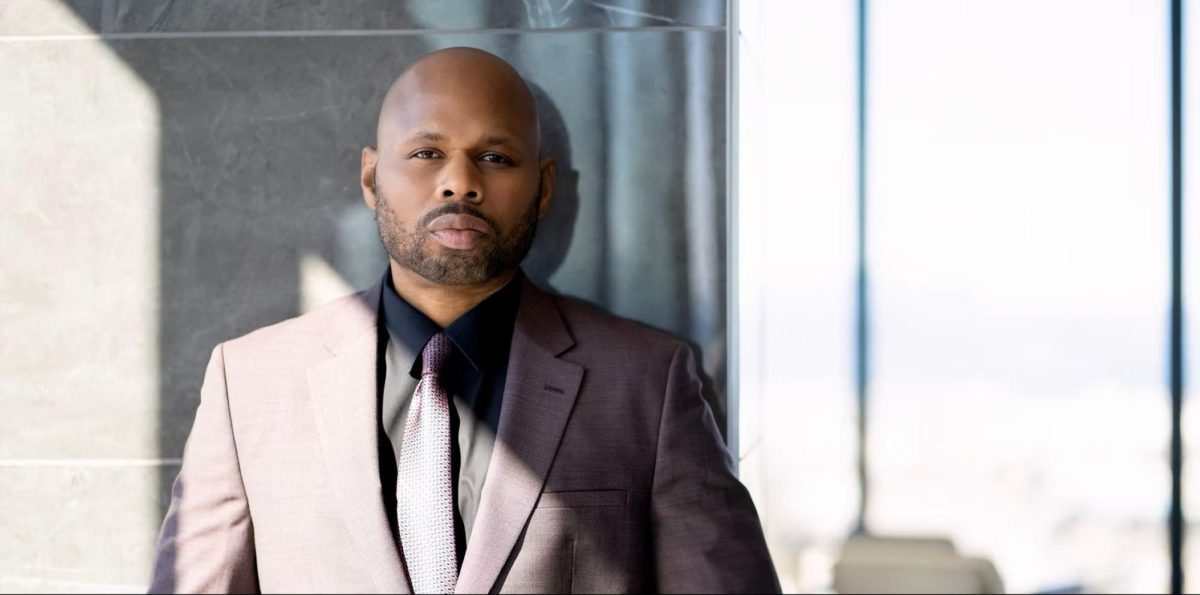
One of Shoreline College’s Visual Communication Technology professors has embraced generative AI for his own creative work. Professor Alan Yates has taught 3D modeling and game design at SC for decades now, and is well known for his love of Star Wars and the Marvel Cinematic Universe, his groan-inducing delivery of dad jokes and his deep knowledge of the graphics and design field. “I want to embrace AI because I see it in my industry,” he says. “It is exponentially decreasing production time.”
The industry is split on the matter. Yates sees this playing out only one way, based on his years of experience with technological change, “You’ll no longer have Hollywood having basically a monopoly on cinematic production.”
When Yates was himself becoming an established artist — he said it took him 10 years after he graduated college before he got his first job as an art director — lived through uncertain times as the desktop publishing revolution disrupted the graphic arts field in the 1980s and ’90s.
Been There, Done That, Designed the T-shirt1
“I was there when we went from manual paste ups and process cameras to desktop publishing, and then from from manual color separations and pre-press to digital separations and direct to plate. Those things put dozens of people out of work. But they didn’t put them out of work permanently; they just moved into different positions,” says Yates.
Asked what advice he gives to his students facing these uncertainties, he replied thoughtfully, “we all have doubts when something new comes along.”
Yates recommends the self-help book “Who Moved My Cheese?” by Spencer Johnson, “It’s all about two little mice in a maze. And every day they’d go and they’d find the cheese in the same place. Then one day the cheese was gone. One mouse sat there and waited and waited for the cheese.”
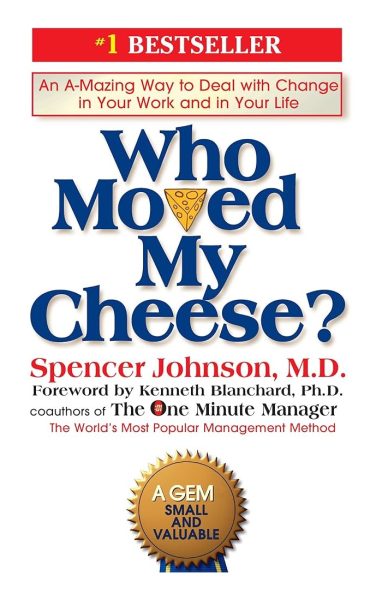
For the politically conservative Yates, the book highlights a work ethic that he tries to encourage in his students. “The other mouse eventually decided to go explore and find the cheese where it had been moved to.” The lesson isn’t just academic to him, because he’s experienced it himself and has the portfolio to prove it. “It’s a good parable.”
“So, I tell my students, don’t give up. You keep moving and whatever happens, don’t give up. And that’s the only way you’re gonna reach where you wanna be,” counsels Yates, quoting an oft-repeated phrase from a recent President Trump commencement speech.
Necessity Is the Mother of Invention
When I began this column, “Journalism is Dead”, my intent was to look back on journalism as a field which I have both benefited from greatly, and also savagely derided and mocked — for profit and pleasure. Journalism, too, is “under threat” from generative AI, but because journalists generally do get a say (even if we don’t get listened to as often as we’d like) our concern is increasingly becoming difficult to discern from outright activism. Which makes it not journalism anymore. So who’s really killing journalism?
Not that activism isn’t the appropriate reflex, but how we act is as important as action itself. It is not enough simply to “resist.” That’s how children react. What matters more is what takes the place of the thing being resisted. Humanity has made some real missteps here, even if we’ve had some really astounding successes, mostly because success isn’t permanent.
My whole life as far as I can recall, I looked forward to living through this time in history. This was not assured. As I mentioned: I have been sick, most of my life; not knowing if I would live through the next winter, let alone witness the dawn of the next era in our evolution.
Technology’s promise was not just to make us more productive worker bees. In Plato’s Republic, he wrote (in translation), “The true creator is necessity, who is the mother of our invention.” We concern ourselves rightly with inequality and inequity, and yet, we dismiss the raw materials that could finally help us overcome them, because they were forged by those who have more to give.
It sometimes makes me wonder if we have become more attached to our oppression than we have desire for our liberation. I know that’s not true, but when the jailer leaves the bars unlocked and the prisoners refuse to leave, it makes me question our motivations.
The Future’s Uncertain and the End is Always Near
I’m an entrepreneurial type, and that means I find hope in impossible causes. The audacity it takes to start a business even during the best of times, requires one to dig deep to uncover reserves of resolve, determination and sheer grit. I will never have anything but the utmost respect for tech entrepreneurs and it concerns me to watch my peers dismiss them as “techno-fascists” because you’re unwilling to try to put yourselves in their shoes and understand their perspective. This concerns me far more than their idealistic enthusiasm for markets and productivity.
The history of artificial intelligence goes back 70 years. Academics and Silicon Valley entrepreneurs have been working diligently to solve the impossible problem of teaching sand and rare earth how to think.
It’s not that runners leading the race never stumble and fall. I just can’t imagine myself being the one who hopes for it to happen. And it’s really hard to watch people I otherwise respect doing so.