

College, at its best, exposes us to a menu of a thousand different ways of thinking that have stood the test of time. Not so we can choose one meal from the menu to dine on for the rest of our lives, but so we can sample a varied diet made up of wholesome ingredients, without overindulging on ideological snack food.
One of the important lessons I’ve learned in life is that no two people think alike. The other important lesson I’ve learned in life is that, when it all comes down to it, everyone thinks pretty much alike.
Those are two of the opposing thoughts I try to keep in mind, while I struggle to remain functional. The way I see it is that we all seem to want generally the same things: a modicum of happiness, a sphere of safety, a community of support, a dream for which to strive. And yet, we go about obtaining them in such different ways. I say potato, you say tomato. Your idea of safety might be my idea of prison. My idea of happiness might be your idea of misery.
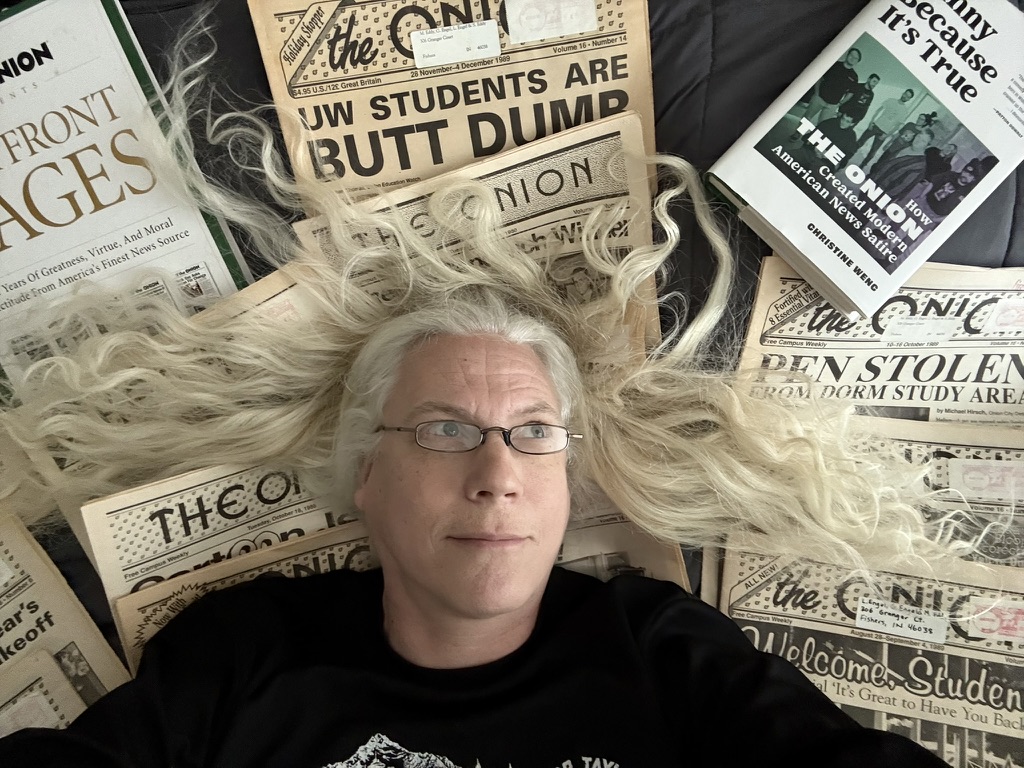
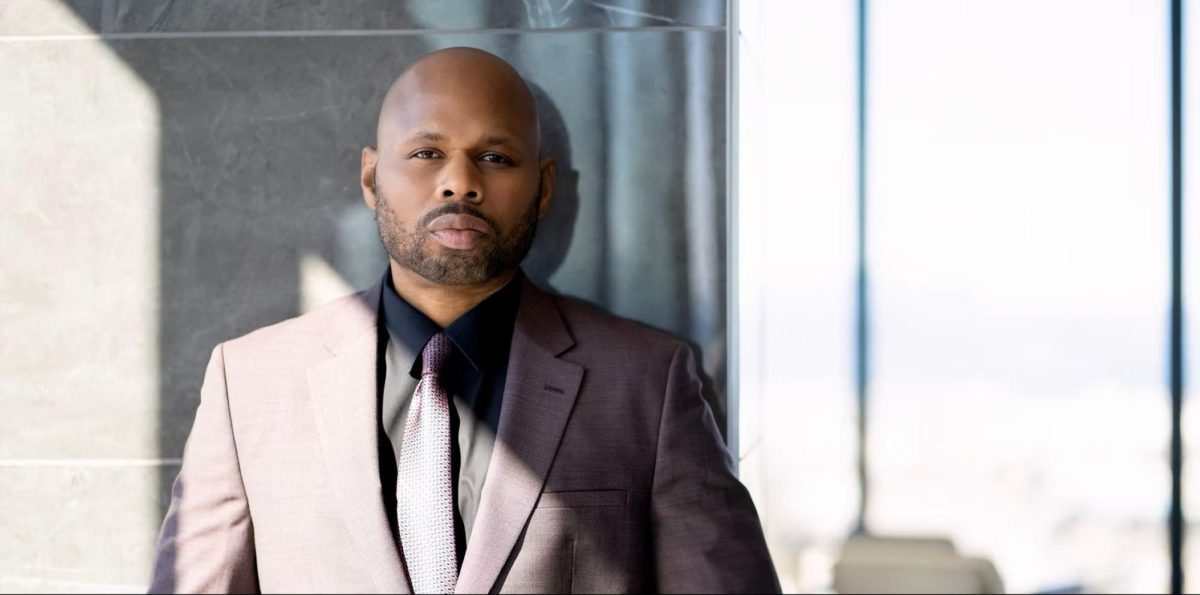
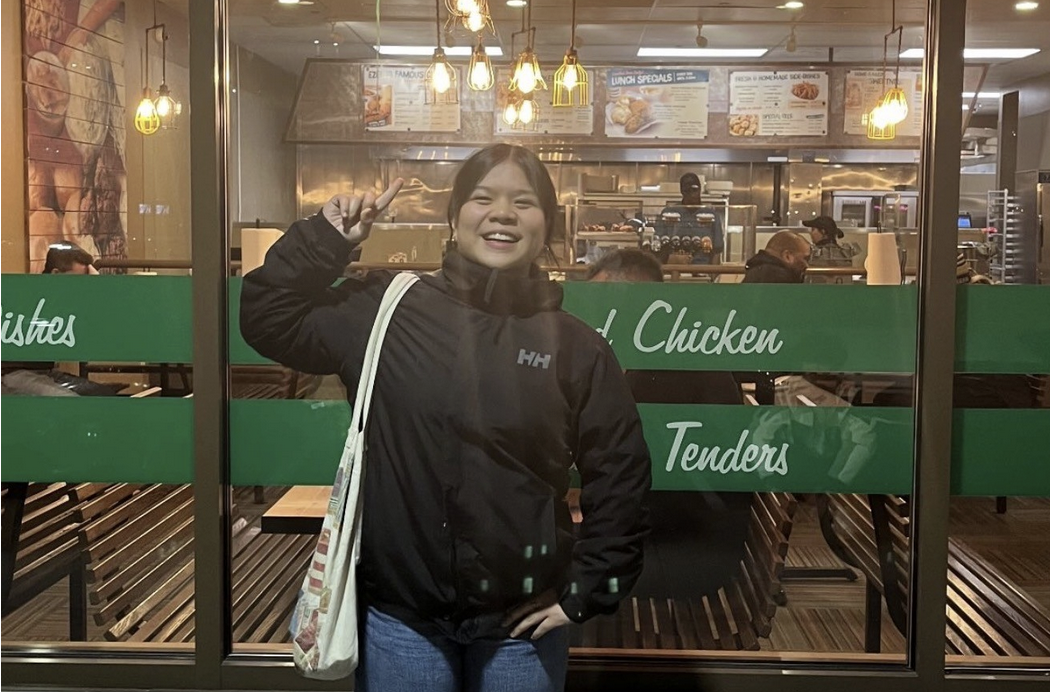
That’s me, by the way, in the photo at the top of the article — in my happy place, surrounded by the ideological snack-food I helped to create when I was young.
The First Rough Draft of the Revolution
The main problem people run into when they try to wield journalism for social change is that it’s not that journalism isn’t effective. Journalism is stupidly effective at changing people’s minds. That is, after all, what it’s meant to do: inform the public.
But who will write the first rough draft of history now that — if the influencers and undertakers are to be believed — Journalism has bought the farm, is pushing up daisies and has Xs for eyes? How will people become informed? What about our jobs? Where will we find meaning, and more importantly, money?
When I moved from Charlottesville, Virginia to Seattle back in 1991, good-paying working-class jobs in timber harvesting were being taken by spotted owls. In what came to be known as the Timber Wars, activists drove steel spikes into trees that would potentially harm loggers trying to harvest them. The state has since regulated clear cutting more strongly, but the spotted owl is still endangered: no longer threatened by Big Timber, but replaced by a more adaptable owl.
What comes around, goes around. Nvidia CEO Jensen Huang, runs a company that supplies the processors that power machine learning algorithms. Huang sees something similar happening he says; “You’re not going to lose your job to an AI, but you’re going to lose your job to someone who uses AI.”
Here we are on the event horizon of the technological singularity, and we find ourselves in fierce competition for jobs that only a few years ago were considered unmitigated bullshit. Such bullshit, we were advocating for four-day or even three-day workweeks. Or to do away with many of them altogether with a universal basic income.
How did the competition get so ugly?
Copernican Revolution No. 9
In 2022, when ChatGPT launched, I was fruitlessly trying to convince my local Department of Vocational Rehabilitation to send me back to school after a decades-long illness ended my career in publishing much earlier than I’d hoped. The DVR counselor had just turned me down, saying after such a long illness, I probably didn’t have what it takes to succeed in college.
I was told not to find meaning in work, that life is just dripping with meaning and purpose, and that work was the worst place to find it. That, based on my test scores, I could be anything I wanted, but DVR could only get me a job as a security guard.
I reapplied at a different branch of DVR, and was accepted, thanks to ChatGPT’s help. I used Khan Academy’s Khanmigo to bone up on my basic algebra. I helped a DeafBlind neighbor use AI so she could engage with the long scientific research articles backed up by pages of complicated charts, her understanding of which was necessary to complete her master’s degree.
In our innovative Visual Communication Technology specialization classes here at Shoreline College, I work with AI models to build art projects that would previously have taken me years to complete. Far from producing “AI slop,” I’ve written articles on the use of AI in journalism that have won awards for our school only to be informed that future contests would bar the use of AI in writing.
Late last year, I was told by my current DVR counselor that I had to pick a different vocation to be a target of my rehabilitation, because as he put it, journalism was no longer a viable career choice. Indeed, according to O*NET OnLine, a national database sponsored by the U.S. Department of Labor, journalists can expect to vie against one another for one of the projected 80 openings across the state this year. And the field is projected to shrink by 12% by 2032.
When I began my career in newspaper publishing, funding for the good works we did came from back-page sex ads, personals and classifieds.
The threat of AI to journalism jobs is mere insult atop the grave injury to an institution that could not keep up with the pace of social change. Even as we deluded ourselves that we were the leading edge of that change.
Nothing Ever Happens
In Part 1, I quoted journalist Josh Tyrangiel urging people to “start thinking about themselves in relation to AI.” I can’t say what Tyrangiel meant by that (probably something like this), but here are my thoughts:
Some of the smartest of us — including academics who are expected to have the intellectual humility to know better — are living deep in a filter bubble where we’re required, on pain of social exclusion, to refer to AI as “stochastic parrots,” “autocorrect on steroids,” or “six-fingered slop-generators.” These depictions may have been valid in 2022, but no longer fully explain the expanding and accelerating intelligence of deep learning models that yes, were once trained solely on language, but in the intervening years have increasingly been trained on everything researchers can get their hands on: podcasts, photos, videos, magnetic resonance imaging, electroencephalograms, whale songs, slime molds, proteins, scents and more. Much, much more.
It’s no surprise that an algorithm developed by a group of researchers to closely model the workings of biological neural networks is capable of such a productive mimicry of them. Monkey see, monkey do.
Such a Shape as Its Shadow Reveals
The relationship, rather than human versus machine, becomes instead a Copernican confrontation with our relationship to understanding itself. When Copernicus informed the Church that the earth revolved around the sun, and not vice versa, our relationship to the universe changed.
Uncomfortable questions arose. When we ask, “Does ChatGPT understand?” we are really asking, “What does it mean to understand something?” What is our relationship to this thing I am being asked to understand? Why is it important to understand? What does understanding help us accomplish in life? What happens when we don’t understand?
On a deeper level, examining our relation to AI means asking ourselves why it upsets us so, without letting the easy answers further fuel our reaction. As psychiatrist Carl Jung wrote, “Everything that irritates us about others can lead us to an understanding of ourselves.”
Live Fast, Die Young, Leave a Beautiful Corpse
When they do finally lay the beautiful corpse of Journalism to rest, on its tombstone I hope it will be written, “It was not the words we wrote that you should remember us by, but the questions we asked.”
Whether journalism lives or dies isn’t my concern. I’m not journalism’s mom.
What I do care about is passing on the values that foster good journalism to future generations of humans, and also to machine learning models. Whatever criticisms you have about their capabilities today, one incontrovertible fact remains: that they learn by example. Our example.
So, be the change you want to see in the AI. The clock is ticking.
Picasso had it right when he said, “Computers are useless, they can only give you answers.” Right up until we built a computer that is quite capable of asking questions (try it). Computers have evolved while humans have regressed. As fate would have it, humans could learn a thing or two from computers, as well.




Brooke G Zimmers • May 18, 2026 at 7:48 pm
Great article. I hope you submit to a wider audience. And if you haven’t seen Steal this Story, Please: The Amy Goodman Story. DO!!