
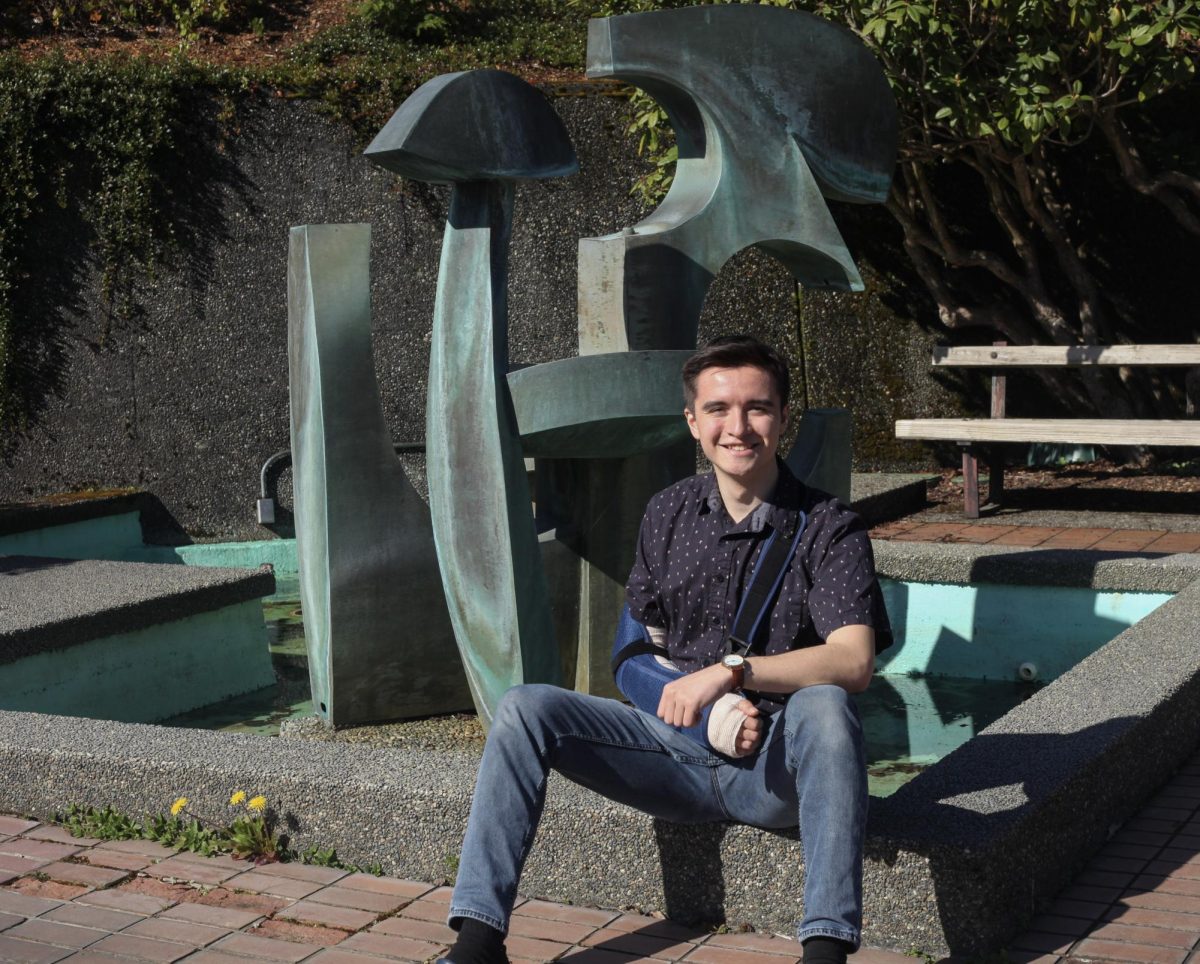
Lucas Heber didn’t start with a plan, he started with frustration.
“I’ve increasingly been seeing the changes happening in our country that made me very upset,” he said. And like many of us, Heber didn’t know what to do about it. He wanted to do more than maybe just an Instagram story. He wanted to know how he could actually make a difference. That feeling of caring deeply, but not knowing how to act, not knowing how to take the next step, is what eventually pushed him into advocacy.
Last summer, Heber began getting involved in political organizing, starting with candidates he believed in, across Washington. What began as uncertainty quickly turned into something that grew. Now, he spends his time organizing volunteers, gathering signatures, and “phone banking”: calling voters one-on-one and asking them to consider candidates he supports. “It’s always nerve-wracking,” he said. “But I feel like I’m always making a difference.” For phone banking, Heber prepares for each call with notes and talking points, but what sticks with him most are the conversations that go beyond the script, the conversations where he sometimes can feel a shift in person on the other end.
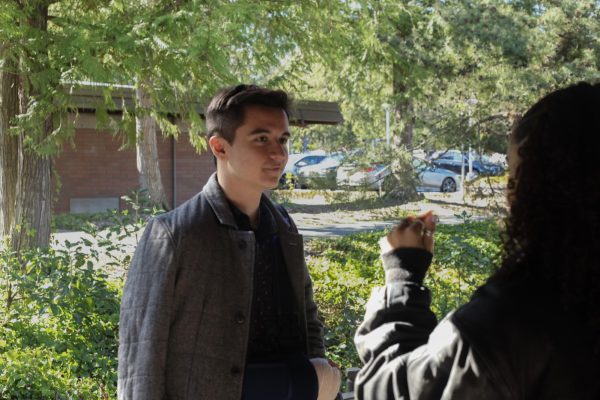
“There were a few times where that happened,” he said, recalling moments when voters were open to discussion. “We had a longer conversation about it…it was pretty cool.” For Heber, the impact isn’t just in the outcome, it’s in the connection. When he introduces himself, he usually says: “‘I’m Lucas, I’m volunteering for so-and-so.’ It’s important to emphasize the whole volunteer thing…like you actually care.” It shows that rather than meeting a call quota, you are doing it because you want to help, because you are a fellow human who lives in this state and country and you care about making it better. That sense of care and collectivity is what Heber now wants to bring to Shoreline College.
“I was thinking about what it would be like to bring some level of political understanding and organization to Shoreline,” he said, “specifically for people who know that things are wrong and they want to do something, but they don’t really know what to do about it.” His idea is rooted in something many students feel: a desire to act, but without a clear place to start. And this is what the Progressive Political Action Club aims to do. He wants the club to create a space where students can both learn and act.
On one hand, the club would focus on education, helping students understand how government works, who represents them, and how to get involved. That could be how to attend a town hall meeting or look up an agenda or how to make changes broadly. On the other, it would focus on giving students the tools to actually do something with what they learn. “I want people to get the basic grasp of, like, ‘Wow, I can actually feel the changes with the actions I take,’” he said. What sets his vision apart isn’t just what the club does, it’s how it starts. Rather than focusing on a single issue, Heber wants to begin with a question: “What do you care about? What’s important to you? What would you like to see?” From there, the group builds outward: “It’s focusing on the individual and then expanding it to the collection,” he said. That flexibility is central to how he understands politics itself.
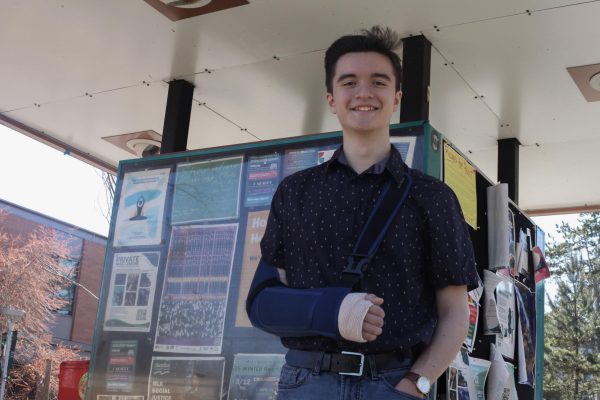
“I think politics is both extremely concrete…but also extremely flexible,” he said. “It can be anything from a municipal change in street design to…workers’ rights.” Heber highlights how politics isn’t just national, it’s personal, local, and everywhere in between. If someone is concerned about safety in their neighborhood: “It could be as small as somebody saying, ‘I don’t like the way a crosswalk is designed in Shoreline,” he said. “So you go, you make the change, and you can see that change.” And at the centerpiece of the Progressive Political Action Club, Heber reflects on how, though the policy is important, it’s the people that make an advocacy movement powerful.
“I’ve found a lot of community lately in what I’ve been doing,” he said. “Making so many friends just through a mutual desire to change things.” That sense of connection, he believes, is just as important as the work itself. It’s what sustains the fire behind the phone calls, the conversations, the research.“You can’t advocate…if you can’t stand together,” he said. “When you’re alone, it feels so intimidating…but together, you have people to lean on.” That’s what his club aims to create: not just a place for action, but a place for belonging. A place for people to ask questions, and aim to find the answers, together.
“Sometimes you have so much emotion…and it’s not able to go anywhere,” he said. “This is like, let’s do this all together.” Looking ahead, Lucas wants to expand that idea even further, bringing together advocacy with creativity and storytelling with other creative arts and film students at Shoreline College. “Movies can teach a lot about perspective… and are a good way to build closer bonds.” For him, the goal isn’t just to get people involved. It’s to help students at Shoreline College see that change is possible, and that they don’t have to do it alone.
Progressive Political Action Club Email: [email protected]